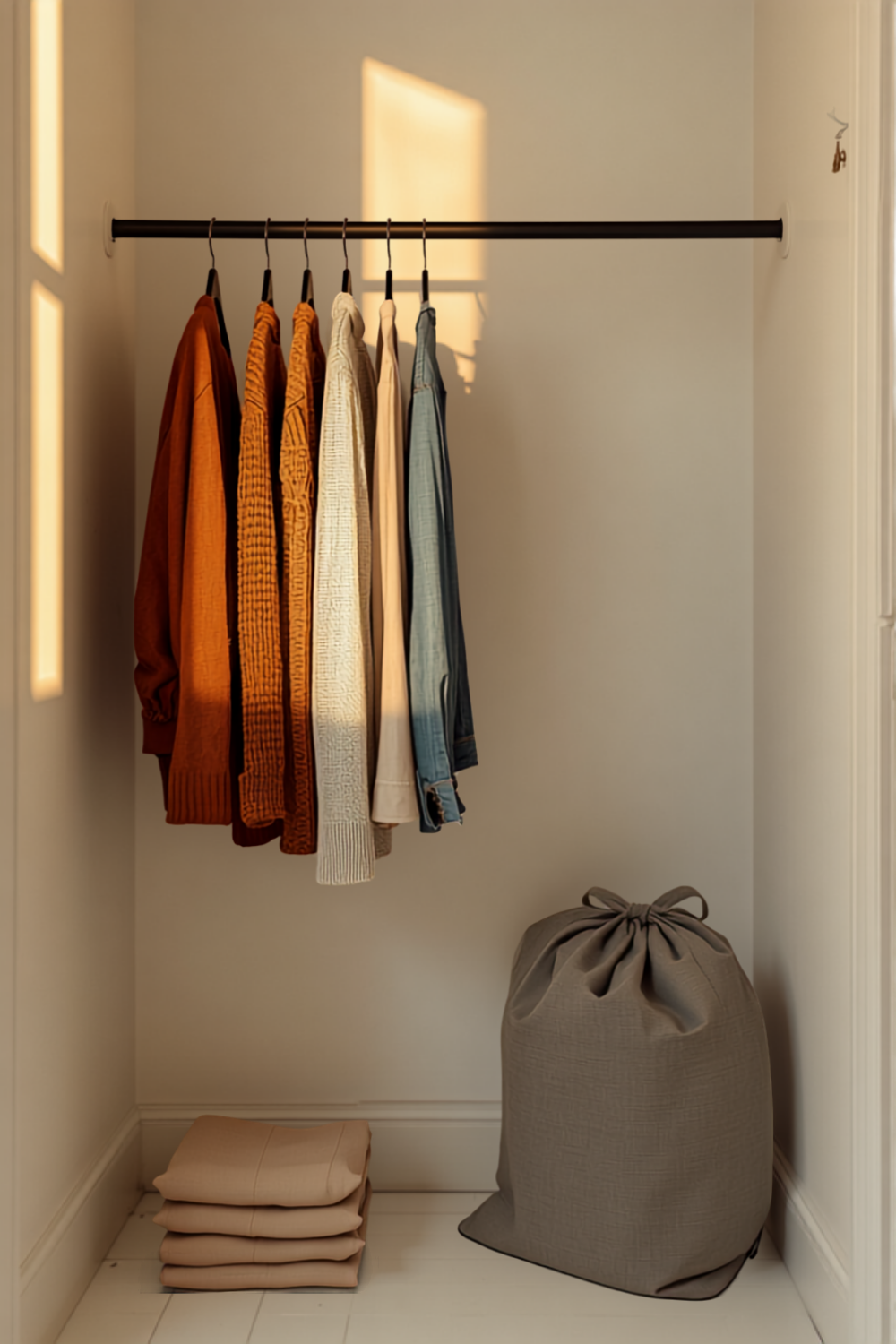
my closet is a reach-in with one rod and one shelf, about four feet wide, and every september i do the same thing: i shove the fall stuff to the front, decide that's the switch-over, and by october i'm digging past six months of shorts to find a cardigan. it took me three years to admit that pushing things around isn't a system. the actual switch-over is a subtraction — you take volume out of the closet entirely, and only then does the rest of it fit.
so this is the version that holds. it's four piles with one decision rule each, a hard cap on how many things get to hang, and two places for everything that doesn't. the thing that makes it work in a small space is that the compressed pile leaves the closet completely, and the way i get it small enough to leave is a set of spacesaver large vacuum storage bags. here's what they actually do:
affiliate link
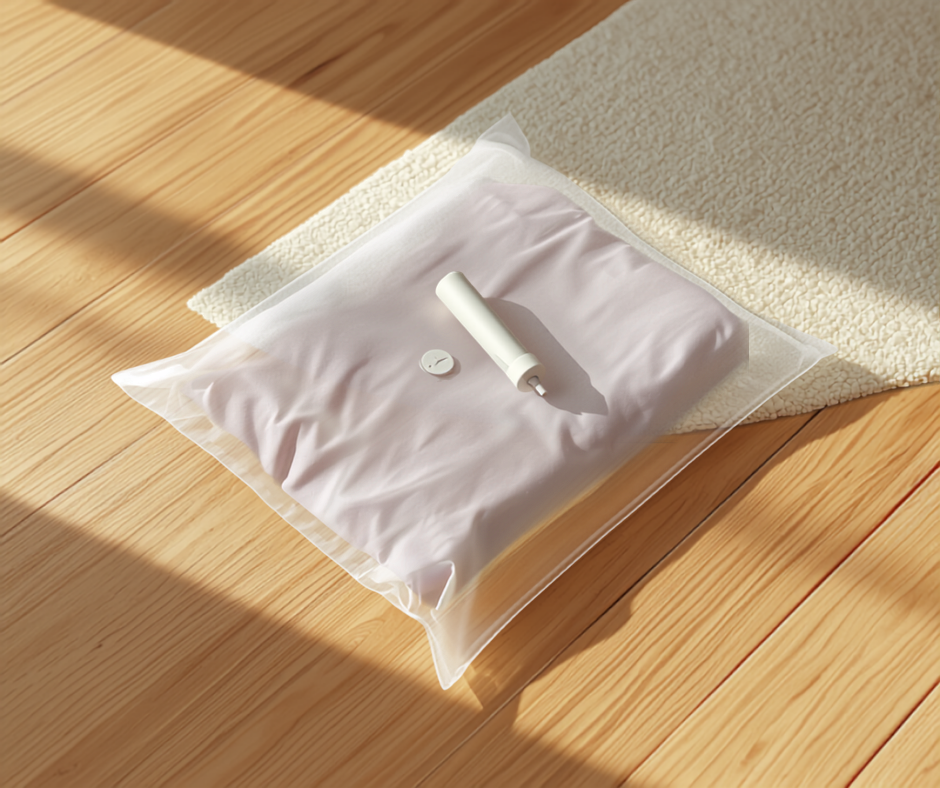
- each large bag swallows about a queen bedding set or four pillows, so one bag takes a whole summer duvet out of the closet and six of them cover a full season
- a double-zip seal plus a triple-seal turbo valve — the valve is the part that matters, because the cheap-bag failure mode is air creeping back in over weeks, not a dramatic pop
- rated to around 80% compression, which in a real closet means a shelf-high stack of folded cotton becomes something you can slide flat under a bed
- the included hand pump means you can seal on the closet floor with no outlet nearby, and a vacuum hose on a low setting does the same job faster if you'd rather
first, the san antonio caveat: don't bag summer yet
this is the part most fall closet posts get wrong for anyone living south of about the thirty-fifth parallel. it is september sixth and it was ninety-six degrees here today. our first honest cool front usually lands somewhere between mid-october and the week of thanksgiving, and even then it's a three-day event before it climbs back to eighty. if you seal every short-sleeve thing you own into a bag this weekend, you will be cutting one open with kitchen scissors in eleven days.
so the switch-over has a fifth category that nobody names: the transition capsule. before you sort anything, pull out ten to fifteen pieces you will genuinely wear in the next six weeks — the tees you actually reach for, two pairs of shorts, the lighter dresses, a couple of long-sleeve things for the one cold morning. those never enter the sort. they stay hanging, at the front, at eye level. everything else gets a rule applied to it.
the four-pile sort, with the actual decision rules
empty the rod. all of it, onto the bed. this feels insane and it is the entire method — you cannot make good calls about a garment while it's hanging in the dark behind other garments. then every single piece goes into exactly one of four piles, and you're only allowed to ask the pile's question, not to have feelings about it.
- pile one: forward. the question is will i wear this in the next six weeks? that's fall pieces plus the transition capsule. this is the only pile that goes back on the rod, and it is capped — more on the cap in a second.
- pile two: compress. the question is is this flat, woven, and truly done until may? swim, tanks, the summer bedding, the linen you're bored of, cotton sundresses. flat and woven is the whole test. this pile gets vacuum-bagged.
- pile three: box, don't compress. the question is does this have loft or structure? every knit, anything with a shoulder or a collar that holds a shape, leather, suede, anything beaded or sequinned. these go into a bag flat and un-compressed. compression is what ruins them and i'll get to exactly why below.
- pile four: out. two questions, and it fails if either one lands wrong: did i wear this at all this summer? and if it vanished, would i re-buy it? no and no means it goes. no and yes means it goes back in pile one and you actually wear it. the trap is the third answer — "i might" — which is not a yes, and has been not-a-yes for three seasons running.
the reason four piles beats keep-or-toss is that it separates two decisions people jam together — do i want this and where does it live. keep-or-toss makes you re-litigate your whole wardrobe. the four-pile version only asks you one small question at a time, and the piles tell you what to buy containers for at the end instead of guessing at the start.
hanger math for a four-foot rod
here's the number that changed how my closet feels. a standard tubular plastic hanger is about half an inch thick at the shoulder. a slim velvet one is about a quarter of that thickness — the ones i use measure 0.24 inches. so sixty garments on plastic occupy roughly thirty inches of rod; the same sixty on velvet occupy about fourteen and a half. that's fifteen inches of rod you get back without removing a single item of clothing. on a forty-eight-inch rod that's nearly a third of the closet, appearing out of nowhere.

- 0.24 inches thick at the shoulder against about half an inch for a tubular plastic hanger — that difference is where the extra foot of rod comes from
- the velvet flocking grips fabric, so wide-neck tops and slip dresses stop sliding off onto the closet floor, which is where half of a small closet's mess actually comes from
- a 360-degree swivel hook, so a piece you shove in sideways still turns to face front — small thing, but it's why the rod stays readable instead of turning into a jumble
- rated to around ten pounds each, with notched shoulders and a lower bar for pants, so one hanger type covers tops, dresses and trousers instead of three
the second half of the hanger trick is the part that isn't about hangers at all: the fifty hangers are the cap. i buy one pack, i hang everything on it, and when i run out of hangers i'm out of closet. no exceptions, no borrowing a plastic one from the back. it converts a vague intention to not over-buy into a physical limit i can see. anything in pile one that doesn't get a hanger has to beat something already on the rod, and mostly it doesn't, which is how the fourth pile quietly grows on its own. this is the same fix-the-system-not-the-symptom logic behind my two-zone entryway shoe storage — the container does the discipline so you don't have to.
the under-bed rotation
piles two and three both leave the closet, and in a rental there's no attic, no basement, and the one shelf above the rod is already full. so they go under the bed, and the trick is to run two containers with different jobs rather than one big one you have to unpack to reach anything.

- six inches tall and forty-two long, so a pair runs down one side of the bed and eats zero floor space you were using
- a clear top window — the difference between storage you rotate and storage you forget, because you can read the contents from the floor without dragging anything out
- breathable non-woven fabric rather than sealed plastic, which matters through a humid south-texas fall: sealed tubs are how folded cotton comes back out smelling like a basement
- reinforced loop handles and a full-length zip, so a loaded bag drags out in one pull instead of tipping its contents under the bed frame
bag a is gone until may: the sealed vacuum bags from pile two, laid flat. you're not opening this one. bag b is next up: pile three, the knits and structured pieces, folded loose and uncompressed, because those are the things you'll want on thirty minutes' notice the first morning it's fifty-eight degrees. write a card and tuck it under each clear window so you can tell them apart lying on the floor at seven in the morning.
then the rotation itself is a ten-minute job in late october, not a whole afternoon again: bag b comes up to the rod, whatever's left of the transition capsule goes down into bag b's spot, and bag a never moves. in may you reverse it. two swaps a year, and because the compressed pile is genuinely sealed and the loose pile is genuinely breathable, neither one comes back out needing to be re-washed.
honest pros and cons
the vacuum bags. pros: the compression is real, around $26-ish for six large bags is cheap for the volume it removes, and sealed flat is genuinely the only way a season of clothing fits under a bed. cons, and there are three worth knowing before you buy. first, compression wrinkles — anything with loft comes out flattened and creased, and knits are the worst offender: a merino sweater goes in fluffy and comes out looking like a pressed flower. that's not a defect, it's physics, and it's exactly why pile three exists. second, re-inflation is slow — even the flat woven stuff wants twenty-four to forty-eight hours hanging to drop its creases, and a lot of it will want a steam or a wash before you'd wear it out of the house, so never compress anything you might need this month. third, valve failure is a slow leak, not a bang. you come back in six weeks and the bag has quietly puffed halfway back up. the usual causes are all self-inflicted: overstuffing past the fill line so the double zip can't fully close, one thread of fabric caught in the zip track, or a hard corner — a shoe heel, a button, a hanger you forgot to remove — wearing a pinhole in the film. fill to the line, run two fingers down the zip twice before pumping, and re-pump once at the halfway mark of the season.
the hangers. pros: the rod-space math is not marketing, the grip genuinely ends the slide-off pile, and around $18-ish for fifty is the cheapest square footage you will ever buy. cons: they shed a little velvet fuzz for the first few weeks, which shows on dark clothes and stops on its own; the shoulder notches can leave faint bumps in very fine knits, so fold those instead of hanging them; and the ten-pound rating is a real limit — a soaked wool coat is at the edge of it. the under-bed bags. pros: cheap, breathable, and the clear window is the whole reason a rotation actually happens. cons: six inches tall means you have to measure your bed frame clearance first, low platform beds will not take them; and fabric bags are breathable rather than sealed, so they're not dust-proof or bug-proof the way a hard tub is. the fair trade is that in this climate i'd rather have airflow than a seal.
the honest overall note: the whole thing is about forty-five minutes of sorting and an hour of packing, and the sorting is the part that actually matters. the containers just enforce decisions you already made. if you only do one piece of it, do the emptied-rod four-pile sort — it costs nothing, and it's the reason my closet stopped being a place i lost things. and if you're renting and want the rest of the room to catch up with the closet, the same reversible, no-drill thinking is all over my renter-friendly decor upgrades.