As an Amazon Associate I earn from qualifying purchases. Check current prices, availability and the exact product option before buying. Styling images are illustrative.
my skin does the same thing every year and every year it takes me a few weeks to catch on. late august, everything is fine: the light gel moisturizer i've been using since june still feels like plenty. then some morning in september i wash my face, put on the same three things in the same order, and by ten a.m. my cheeks feel tight in a way they just didn't in july. nothing dramatic happened. the air changed, and my routine didn't.
i want to say the next part loudly, because september skincare content gets unhinged fast: you do not need a new routine. you need a transition. that difference is the whole post — a transition is two small moves spread across about six weeks, and it costs you roughly one product you were going to repurchase anyway. the first move is also the easiest, and it's just adding a layer of a hyaluronic acid serum with b5 and ceramides underneath whatever you already put on at night. here's what that one little bottle is actually doing:
affiliate link
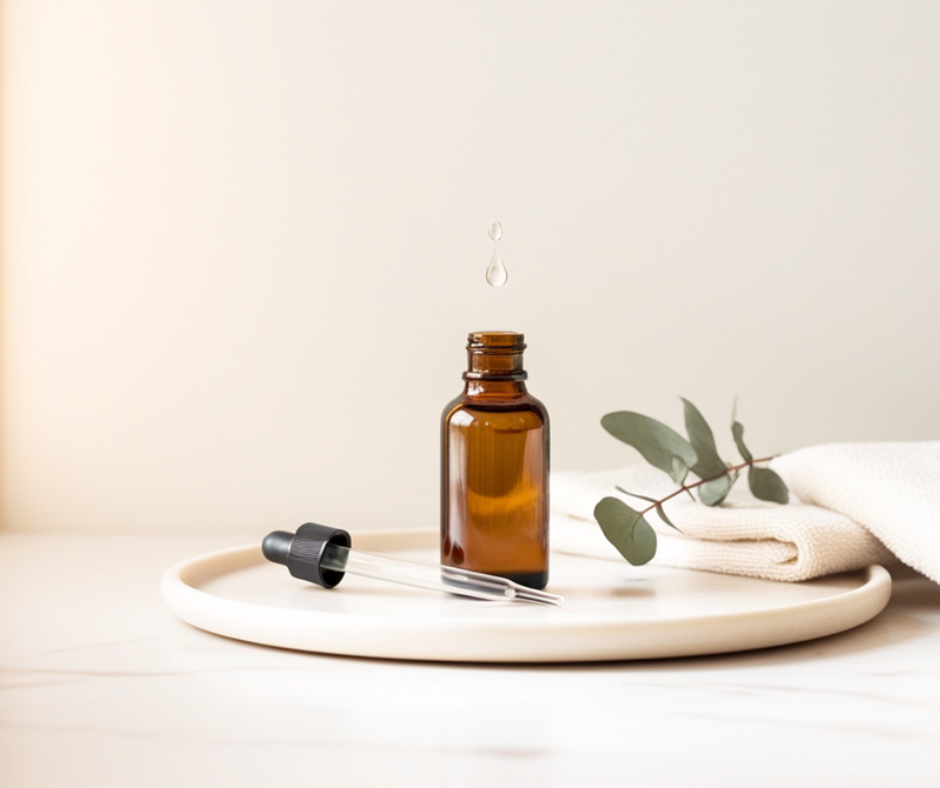
- a water-light serum you press onto damp skin — the hyaluronic acid is blended at several molecular weights (the listing calls it multi-depth), so it isn't all sitting on the very top surface
- the reformulated version has ceramides in it too, which is the part that matters this time of year: it's a hydrating step that also leaves something behind instead of evaporating off
- 1 fl oz in a glass dropper — follow the current label for the amount to apply; bottle life varies
- fragrance free; compare the current size and price, and test it before adding it to your routine
what actually changes in september (and what doesn't)
here in san antonio the calendar says fall and the thermometer says absolutely not — it's still running warm well into october. so the thing that gets my skin first isn't cold weather at all. it's the a/c, which has been quietly pulling moisture out of every room i sit in since may, and then later the first stretch of genuinely dry outside air plus a heater on at night. that combination is what makes a face that was perfectly happy in july start feeling tight by mid-morning.
the second thing that changes is that summer textures stop being enough. a gel moisturizer is built to feel like nothing — light, fast-absorbing, no film. that's exactly right when you're sweating through august. it's the wrong tool when the air around you is drier, because there's very little left on the surface to slow water leaving. same product, same amount, different weather, different result. that's not the gel failing you, it's a seasonal mismatch.
and here's what does not change, said plainly because every september somebody puts their sunscreen in a drawer with the sandals: spf does not get retired. uv does not take the season off just because the light got prettier and lower. cloudy days, car windows, the walk from the parking lot — it's the same daily step in october that it was in june, and it is the single most boring, most non-negotiable line in this entire post. if you change one thing about your sunscreen for fall, change the finish, not the habit: a lot of people prefer a creamier one once the mattifying summer formula starts to feel chalky.
barrier basics, in plain language
every fall you will hear the word barrier roughly nine hundred times and almost never a definition, so here's mine, in normal words. the outermost layer of your skin behaves a bit like a brick wall: cells are the bricks, and there's a lipid mixture between them acting as mortar — ceramides, fatty acids, cholesterol. when that mortar is in good shape, skin holds onto water and looks smooth and even. when it's running thin, water leaves faster than it's replaced, and the result is the feeling everyone recognizes — tight after cleansing, a bit rough at the cheekbones, makeup catching on flaky patches, that dull look in the mirror at 4 p.m.
so a cosmetic routine aimed at this season is doing two unglamorous jobs: putting water in (that's the hydrating serum) and leaving something on top so it doesn't all march straight back out (that's the cream). that's the entire concept. ceramide-containing moisturizers are popular in fall for exactly that reason — they're topping up the same category of ingredient the mortar is made of, so the surface feels more comfortable and looks less dry.
i do want to be clear about my lane here: i'm writing about how products feel and how skin looks, not about treating anything. if your skin is genuinely angry — stinging, raw, not settling down over a week or two — that is a conversation with an actual dermatologist, not a blog post and not a shopping cart. test a new skin-care product on a small area twice daily for seven to ten days before wider use, following AAD guidance. stop if irritation develops; seek a dermatologist for a persistent or severe reaction.
a gradual transition, if needed
the reason to spread this out is that if you change five things at once and your skin gets weird, you have no idea which one did it. one variable at a time, two weeks each. it's slower and it's the only version that actually teaches you anything.
- first, if your skin needs more hydration: change nothing except adding the serum at night. same cleanser, same moisturizer, same spf. follow the product label for how much to apply, then your usual moisturizer straight over the top while it's still tacky. patch test first if it's new to you.
- next, reassess comfort: pay attention rather than shop. where does it feel tight, and when? if it's mornings only, add the serum to your a.m. routine too. if it's one patch — usually cheeks or the sides of the nose — that's your tell for where the cream is going to earn its money next month.
- later, only if needed: the texture swap. the gel moves to daytime or to the back of the shelf, and a proper cream takes the night slot. this is the one purchase in the whole plan.
- anytime: nudge your water temperature down. long hot showers feel amazing and they are working directly against everything above.
that's it. two moves. if you're reading this in early september and feel like you should be doing more, the honest answer is that doing less, later, in order, is what works.
move two: the optional texture swap
when the gel stops being enough, the fix is a thicker cream at night, and the one i keep buying is the big tub — partly because it's genuinely good and mostly because the size means i stop rationing it. that is the actual failure mode with nice moisturizer: you buy a 1.7 oz jar, it feels precious, you use a pea-sized amount, and then you wonder why nothing changed.
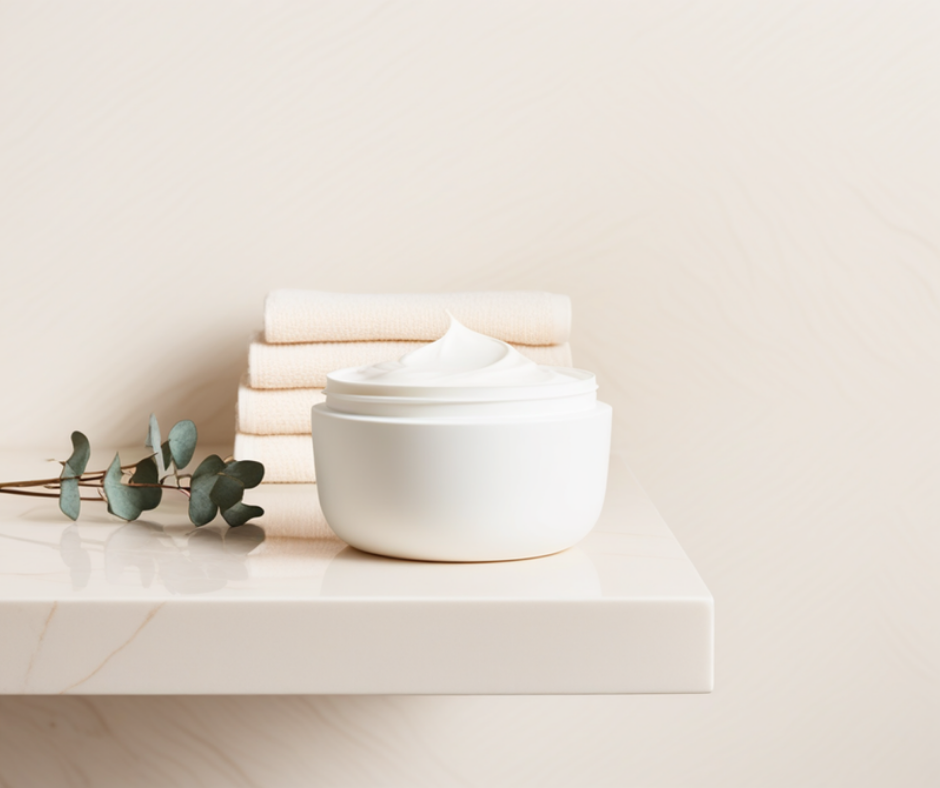
- a thick, non-greasy cream with ceramides plus hyaluronic acid — the texture change the season is actually asking for, using the same ingredient family as the serum underneath it
- the 19 oz tub is the whole argument: it's big enough to use generously on your face at night and on shins, elbows and hands after a shower, which is where fall dryness shows up second
- fragrance free and non-comedogenic, so it layers over a hydrating serum without fighting it and without adding another scent to your evening
- it's a tub, not a pump — scoop with clean dry hands or a little spatula; a pump bottle version of the same formula exists if dipping into a jar bothers you
one small mechanical thing that makes a bigger difference than the product choice: put the cream on while your skin is still slightly damp, within a minute of washing your face or getting out of the shower, and pat dry instead of scrubbing dry. i got obnoxious about towels this year for exactly this reason — a thirsty, soft towel you press against your face is a completely different experience from a stiff one you drag across it, which is the whole point of my bath sheet upgrade post. dry skin plus a rough towel plus a thin gel is three small mistakes stacking into one tight face.
the overnight step nobody regrets
lips go first and they go fastest. they don't have the same oil situation the rest of your face does, so they lose water quicker, and the flaky-lip season starts weeks before anybody admits it. daytime balm is fine but it's a reapply-every-hour arrangement. the thing that actually changes the situation is a thicker overnight mask you put on last, after everything else, and then go to sleep on.
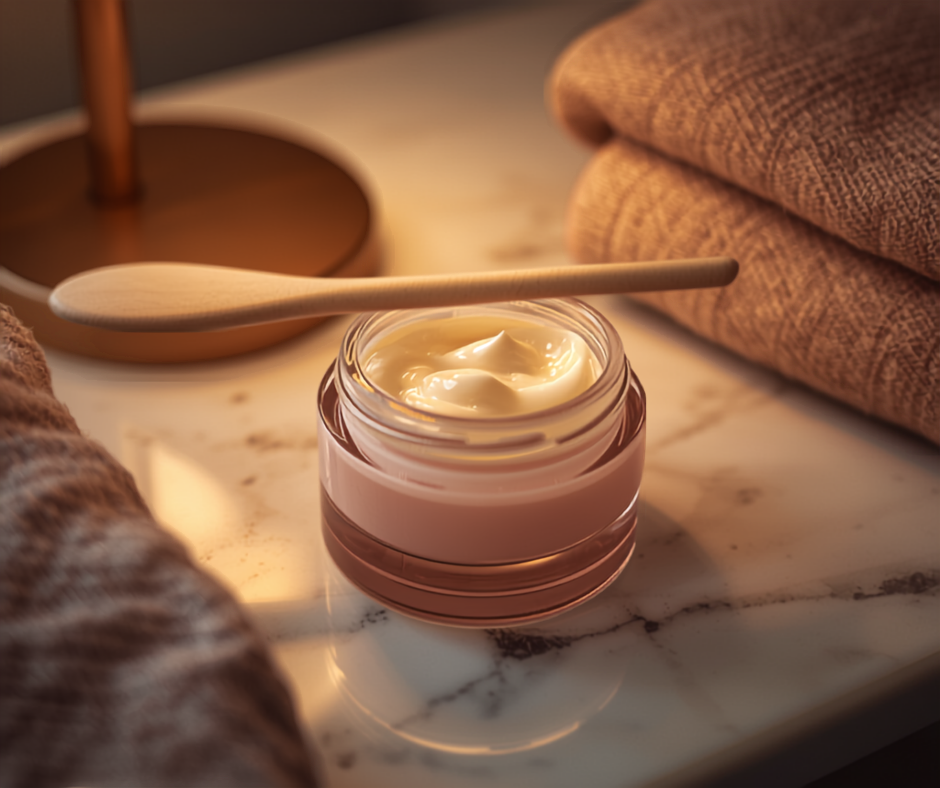
- a thick balm-textured overnight mask rather than a daytime balm — you put it on as the last thing you do and it's still there in the morning, which is the entire point of it
- shea and murumuru seed butters plus vitamin c and antioxidants; berry is the original flavor and the one most people mean when they say they have this
- comes with a tiny spatula, so you're not putting a finger into the same jar every night for six months
- a 20 g jar lasts months at one nightly scoop — it's the priciest thing here per gram and also the one that will outlive both other products on this list
i'll admit the real reason this step sticks for me is that it's the nicest thirty seconds of the night. lamp on instead of the overhead, something warm going in the room — i wrote the whole layering method out in my scent stacking post — lip mask on, done. a routine you look forward to is a routine you keep in november, and a routine you keep is the only kind that does anything.
what to drop (the over-exfoliating talk)
this is the part most fall skincare posts skip, so: the instinct when your skin looks dull and feels rough is to exfoliate it. more acid, more scrub, get the flakes off. i have done this and it is the wrong move at exactly the wrong time of year. rough and flaky in september is usually a moisture problem wearing an exfoliation problem's clothes, and sanding it does not put water back.
so here's my actual september edit, and it's all subtraction:
- avoid exfoliating irritated skin; the right frequency depends on your skin and the product instructions.
- drop the second cleanse at night if you're not wearing much makeup. a foaming cleanser twice a day is a summer habit that gets uncomfortable fast in dry air.
- stop stacking new actives. autumn is when everyone's feed says to start a retinoid, and if you're already adding a serum and changing your moisturizer, that's plenty of new variables for six weeks. it'll still be there in november.
- don't drop your spf. saying it twice on purpose. it's the one that people quietly retire in september and then wonder about in march.
and the thing to drop that isn't a product: the ten-step overhaul. a seasonal reset that involves nine new bottles isn't a reset, it's a shopping spree with a theme, and if it goes badly you won't be able to tell which of the nine did it. two moves, six weeks, in order.
honest pros and cons
the hydrating serum. pros: it's available in a small bottle, it's fragrance free, and it's the simple way to test the whole premise of this post. cons — and this is a real one — hyaluronic acid is a water-holding ingredient, so if you apply it to bone-dry skin in genuinely dry air and don't seal it with anything, it can leave your face feeling tighter, not softer. damp skin, then moisturizer on top, always. who shouldn't bother: if your skin is still perfectly comfortable in a gel and nothing feels tight, you don't need this yet — wait until it does. also, glass dropper bottles are objectively a bit annoying at 11 p.m.
the big tub of cream. pros: cheap per ounce, fragrance free, and the size means you use enough of it, which is most of the battle. cons: it is thick. under makeup in the morning some people find it too rich and it can pill under a mattifying spf, so night-only is a completely valid way to own it. the tub also isn't the most hygienic format — clean hands or a spatula, or buy the pump version. who shouldn't: if rich creams have felt heavy or congesting on you before, keep this one for your body and use something lighter with ceramides on your face.
the lip mask. pros: it adds a richer-feeling overnight layer, the spatula is a nice touch, and one jar lasts an absurdly long time. cons: it's sold in a 20 g option; check the current price, which is the most expensive thing here by a distance, and it is scented and flavored — if you dislike sweet berry things near your face at bedtime you will not enjoy this one, and there are unscented versions of the same idea. who shouldn't: if you're sensitive to flavor or fragrance on your lips, skip it and use a plain occlusive balm instead; you get most of the effect.
last honest note, applying to all three: none of this is fast. skin turns over on its own schedule, and two weeks is the shortest window where you can fairly judge whether a change did anything. take a photo in the same light on day one if you want an actual comparison, because your memory of what your face looked like in august is not reliable. and patch test. always patch test.