
As an Amazon Associate I earn from qualifying purchases. Product prices and availability can change.
for most of the summer the end of my counter had two glass dispensers parked on it — that was the whole summer drink station, cold stuff, self-serve, zero effort from me. it worked so well that when i wanted a cozy indoor drink i tried to just keep it going with warm things, and that was a mistake. cold drinks scale by volume. hot drinks don't. nobody wants a gallon of cider going lukewarm in a glass jar for four hours. the fall version of that corner is a different machine entirely: smaller batches, made to order, and the thing you need isn't a spigot, it's water at a temperature you choose.
so here's what actually lives in that corner now, and the three drinks it makes. the piece doing the most work is a gooseneck kettle with temperature control, which makes it easier to repeat the water temperature and control the pour. keep milk and cider out of the kettle; it is for water only. here is what the selected model offers:
affiliate link
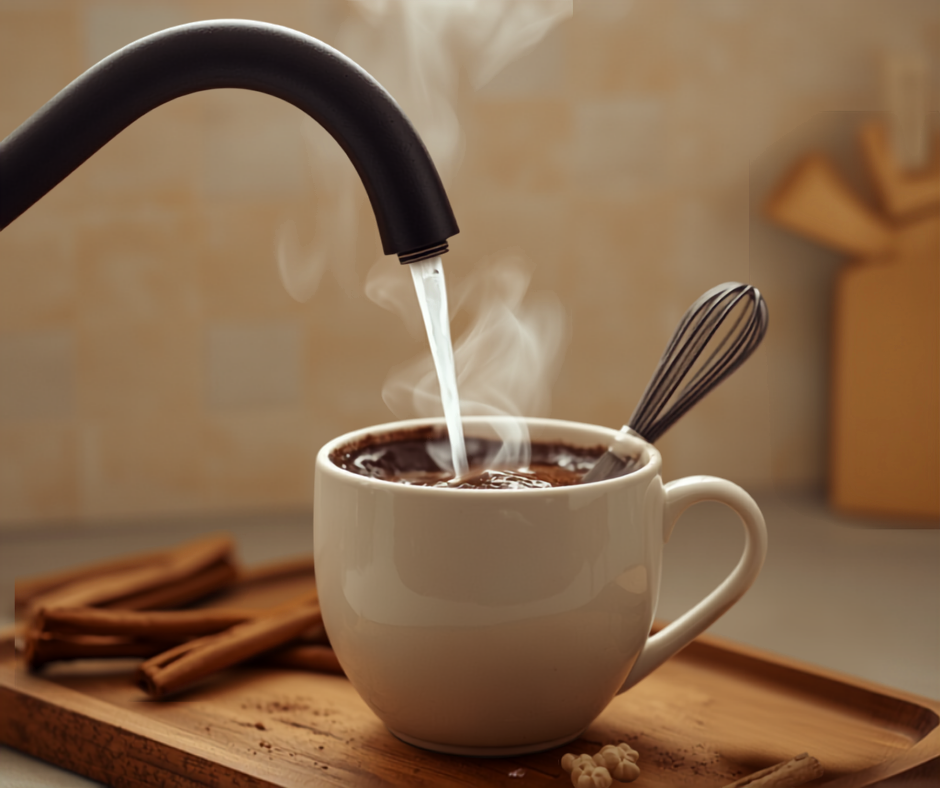
- five temperature presets: 170°F, 180°F, 195°F, 205°F and 212°F; this model uses preset buttons, not a custom-temperature dial
- a 60-minute keep-warm that holds the temperature you picked — helpful when making a second drink
- a real gooseneck spout, so you get a slow pencil-thin stream you can aim: it's what lets you whisk cocoa paste with one hand and pour with the other without flooding the mug
- 0.8l capacity and 1200w rated power, with a stainless-steel interior; heating time depends on fill and starting temperature
Kettle specifications: COSORI model information. For the press, follow the Bodum instructions.
drink one: mulled cider, from actual cider
starting with the honest part: this one does not use the kettle. cider is sugary and cloudy and you should never put it in something you also brew coffee water in. mulled cider is a saucepan job, it takes twenty-five minutes, and it makes the whole apartment smell like the inside of an orchard, which is most of the point.
choose pasteurized unfiltered cider for a fuller apple flavor, or use unsweetened apple juice if that is what you have. half a gallon is the right batch — it fills five or six mugs and it's gone before it can get tired.
- 64 oz (half gallon) pasteurized unfiltered apple cider
- 3 cinnamon sticks
- 6 whole cloves — count them, this is the one that goes wrong
- 3 whole star anise
- 1 orange, sliced into rounds, peel on
- a 1-inch piece of fresh ginger, sliced thin (optional, and very good)
- 2 tbsp brown sugar — taste first, good cider usually needs none
- everything into a saucepan. cold start, no need to heat anything first.
- bring it to a bare simmer over medium and then drop to low. it should be steaming with the occasional lazy bubble, never a rolling boil — boiling drives off the aromatics you just paid for and pulls a harsh medicinal edge out of the cloves.
- hold it there 20–25 minutes.
- fish out the spices and the orange rounds. this is the step everyone skips. left in, the cloves keep extracting and by hour two it tastes like a dentist's office.
- taste, then sweeten if it needs it. ladle into mugs, one fresh cinnamon stick per mug as the garnish.
the ratio to remember, so you can scale it without this page open: one cinnamon stick, two cloves, one star anise per 20 oz of cider. make a batch for serving, then cool and refrigerate leftovers promptly instead of leaving the pot out all afternoon.
drink two: hot cocoa from cocoa powder, with the ratios
packets are engineered for the wrong problem. they're built to dissolve in whatever hot liquid you've got, which means most of the packet is sugar, dried milk solids and an anti-clumping agent, and only a little of it is chocolate. real cocoa powder is the opposite — almost all flavor, and it will not dissolve if you dump it into a full mug. that's why homemade cocoa gets a reputation for floaters. the fix is thirty seconds of technique.
per generous 12 oz mug:
- 1 tbsp unsweetened cocoa powder (heaping if you like it dark)
- 1 tbsp sugar — 1½ if you grew up on packets
- a real pinch of salt, not a symbolic one
- 8 oz milk; whole milk gives a richer result, while skim or oat milk changes the texture
- ¼ tsp vanilla, off the heat at the end
- whisk the cocoa, sugar and salt together dry in the mug.
- add 2 tablespoons of 195°F water from the kettle and whisk it into a glossy paste, like thin frosting. this is the whole trick — the cocoa hydrates in a small amount of liquid or it doesn't hydrate at all.
- heat the milk to about 150°F — use a small saucepan and a thermometer, stirring so it heats evenly.
- pour the hot milk into the paste in a thin stream while you whisk. it goes from muddy to silky in about five seconds.
- vanilla in last, off the heat, or you cook it right back off.
the small splash of hot water helps you whisk the cocoa into a smooth paste before adding the milk. the 195°F preset is convenient here; keep hands clear of steam and leave room in the mug for whisking.
the station jar version: 1 cup cocoa powder + 1 cup sugar + 1 tsp salt, whisked together, is about sixteen servings. it lives in a sealed jar on the tray, and the label on the jar says 2 tbsp + 8 oz milk so nobody has to ask me. it keeps about three months before the cocoa starts tasting flat. if you want the grown-up version, melt a tablespoon of chopped dark chocolate into the finished mug — it goes from hot cocoa to drinking chocolate, thick enough to coat the spoon.
drink three: the maple-cinnamon latte, made with french press coffee
i wanted a fall latte at home without buying an espresso machine, and the answer turned out to be a piece of equipment i already owned. a french press brews a stronger coffee base for the drink. froth the milk separately with a whisk or a dedicated milk frother, following its instructions.
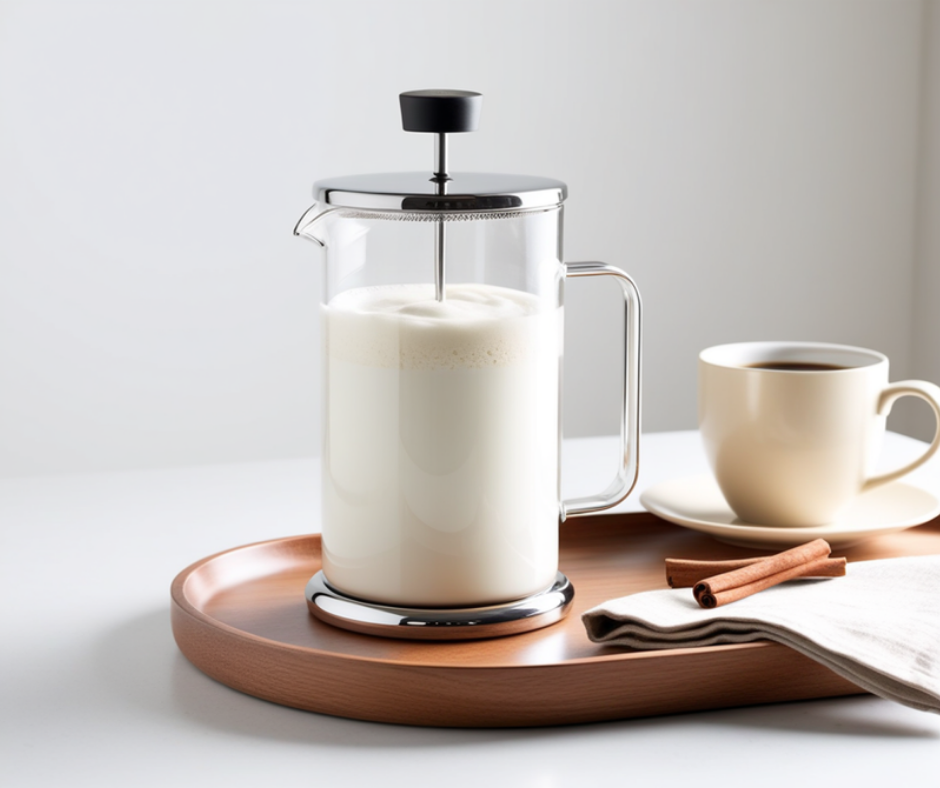
- brews at whatever strength you set the ratio to — for lattes i go 1:8 instead of the usual 1:15, which gives you a base strong enough that milk doesn't erase it
- use the press for coffee and a whisk or dedicated milk frother for the milk; do not rapidly pump hot liquid in the glass beaker
- high-heat borosilicate glass beaker in a steel frame, and the beaker, filter and plunger are all dishwasher safe — the frame and lid are the hand-wash parts
- every piece is replaceable — beaker, filter screen, plunger — so a drop in the sink means ordering one part instead of a whole new press, which is why this design has outlived every french press i've owned
the maple-cinnamon syrup (makes enough for about four drinks): ¼ cup real maple syrup, ¼ tsp ground cinnamon, a pinch of salt, warmed in a small pan for two minutes until the cinnamon stops sitting on top. make a small amount and refrigerate any extra promptly in a clean covered container.
the coffee: 5 tbsp coarsely ground coffee, 10 oz water at 205°F. pour, stir once, lid on, wait four minutes, press down slowly. never force the plunger if it resists: hot liquid can spray out. use coarse grounds and follow the press instructions.
the milk: warm 4 oz of milk gently in a saucepan, then whisk carefully or use a dedicated milk frother according to its fill limits and instructions. keep the coffee press for brewing coffee. the styling image shows milk in a press, but it is not an instruction to pump hot milk in that beaker.
build it: 1 tbsp of the maple-cinnamon syrup in the bottom of the mug, 5 oz of the press coffee, stir. pour the milk in from a couple inches up so the liquid goes under and the foam stacks on top, then spoon the last of the foam over. a scrape of fresh nutmeg on top and you're done.
this is a home latte-style drink with concentrated brewed coffee, so it will taste different from espresso. foam texture depends on the milk and frothing tool; prepare it last and serve promptly.
what actually lives in the corner
the station is about sixteen by twenty inches of counter, which is smaller than people expect. the rule i use is the tray rule: get one wooden or metal tray, and anything that fits inside its edges is allowed to live out permanently. anything that doesn't fit goes in the cabinet. it stops the corner from creeping across the whole counter by november, and it means wiping the station down is picking up one object.
on the tray: the kettle on its base, positioned on the outlet side so the cord isn't crossing the working space. the press, empty and clean, lid on. two sealed jars — one of the cocoa mix, one holding the mulling spices, which i portion out ahead into little muslin bags so a batch of cider is grab-one-and-drop-it instead of counting cloves in the moment. a small crock with a whisk, a long spoon and a microplane for the nutmeg. mugs stacked next to the tray, not on it. and one insulated travel tumbler, because the honest truth is half of these drinks get made at 7am and walked out the door.
what does not live out: milk, cider and the maple syrup, which all belong in the fridge, and ground cinnamon, which goes stale in a few months and is the reason so much homemade fall stuff tastes like dust. whole spices in a sealed jar away from the stove hold their oils for close to a year — that's why every recipe up there uses sticks and pods instead of powder. label the jars, including the ratio, in whatever handwriting you've got. it feels excessive for about a week and then it's the reason anyone else in the house can make a drink without texting you.
one last thing that costs nothing and does an unreasonable amount of work: the corner should smell right before anything is even brewing. i keep the amber-and-clove end of my scent stacking lineup on a separate shelf away from the hot-water area, and between that and a cinnamon stick in the cider, the kitchen reads as fall from the doorway. a drink station is half a beverage setup and half a mood, and the mood half is free.
honest pros and cons
the kettle. pros: the temperature presets genuinely change how coffee and cocoa taste, the keep-warm is what makes serving more than one person tolerable, and the gooseneck pour is so much more controlled than a regular kettle that going back feels clumsy. cons: 0.8l is small — that's about three mugs, so for a group you're doing two rounds. check the current price for the exact model before buying. and it does take up permanent counter real estate, which is exactly why the tray rule exists.
the press. pros: it makes coffee without an espresso machine, replacement parts are available for compatible models, and it makes a coffee base that milk can't wash out. cons: it is glass in a metal frame and glass breaks, so it is not the thing to hand a kid; the metal mesh lets fine particles through, so the last inch of the mug has a little sediment if you pour it all out; and it wants a coarse burr grind — pre-ground supermarket coffee is usually too fine and gives you a muddy cup so use coarse grounds and press gently. a separate milk whisk adds one item to wash, but keeps the coffee press focused on brewing.