As an Amazon Associate I earn from qualifying purchases. Product prices and availability can change.
the thing nobody warns you about september is how fast the evenings disappear. june through august i could start dinner at eight and nobody cared. now there's a schedule again — everything starts earlier, everything ends later, and by the time i'm actually in the kitchen it's 6:40 and i have the energy of a wet paper towel. that's the window where takeout wins, every time, unless you have something that goes from cold protein to done in under twenty minutes with one thing to wash afterward.
for me that's the air fryer, and i want to be specific about why instead of just saying it's great. it preheats in about four minutes instead of fifteen. it puts dry, moving 400°F air right against the surface of the food, so skin and edges brown instead of steaming. and the whole thing is one basket, which means the cleanup is one basket. i run mine — a 6-quart cosori turboblaze — five or six nights a week, and the three dinners below are the ones that have actually stuck in the rotation. here's what the machine itself does:
affiliate link
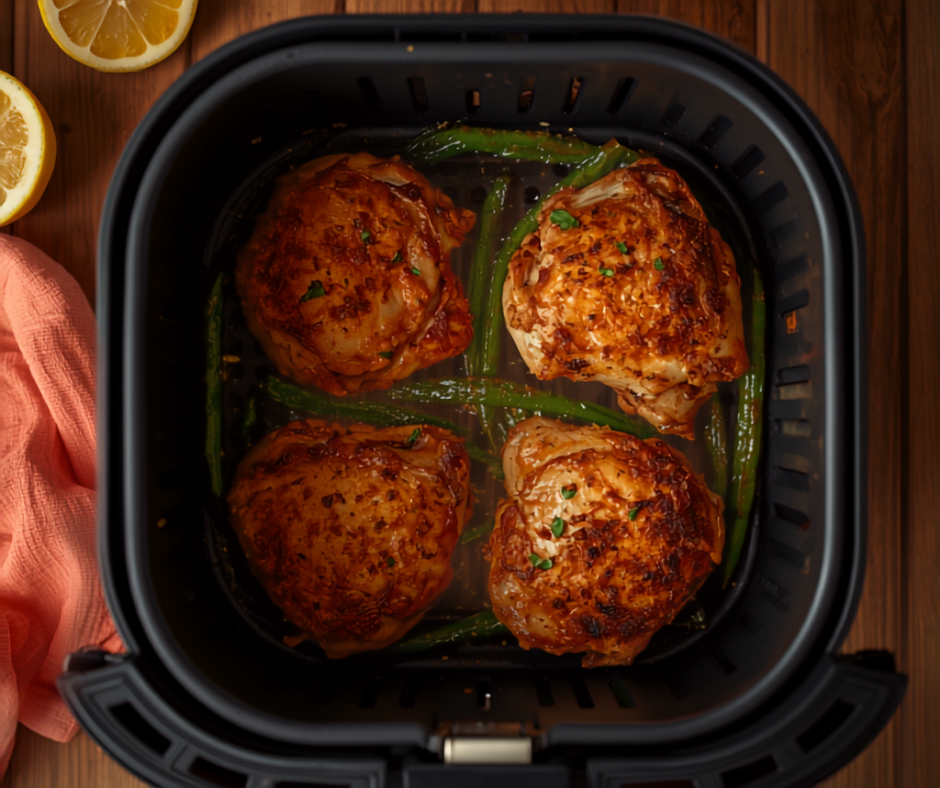
- a 6-quart square basket, which matters more than the number — square gives you usable flat area, so four chicken thighs or two salmon fillets sit in a single layer instead of overlapping and steaming each other
- 90°–450°F range, so it goes low enough to gently reheat and hot enough for the 400°F+ browning that makes skin actually crisp rather than just hot
- five fan speeds instead of one — the low settings stop light stuff (chickpeas, green beans, herbs) from getting blown around and welded to the heating element, which is the single most annoying air fryer failure
- a nonstick basket; check the exact model listing for coating and cleaning instructions, and it runs under about 53dB, so it isn't the jet-engine noise older models are known for
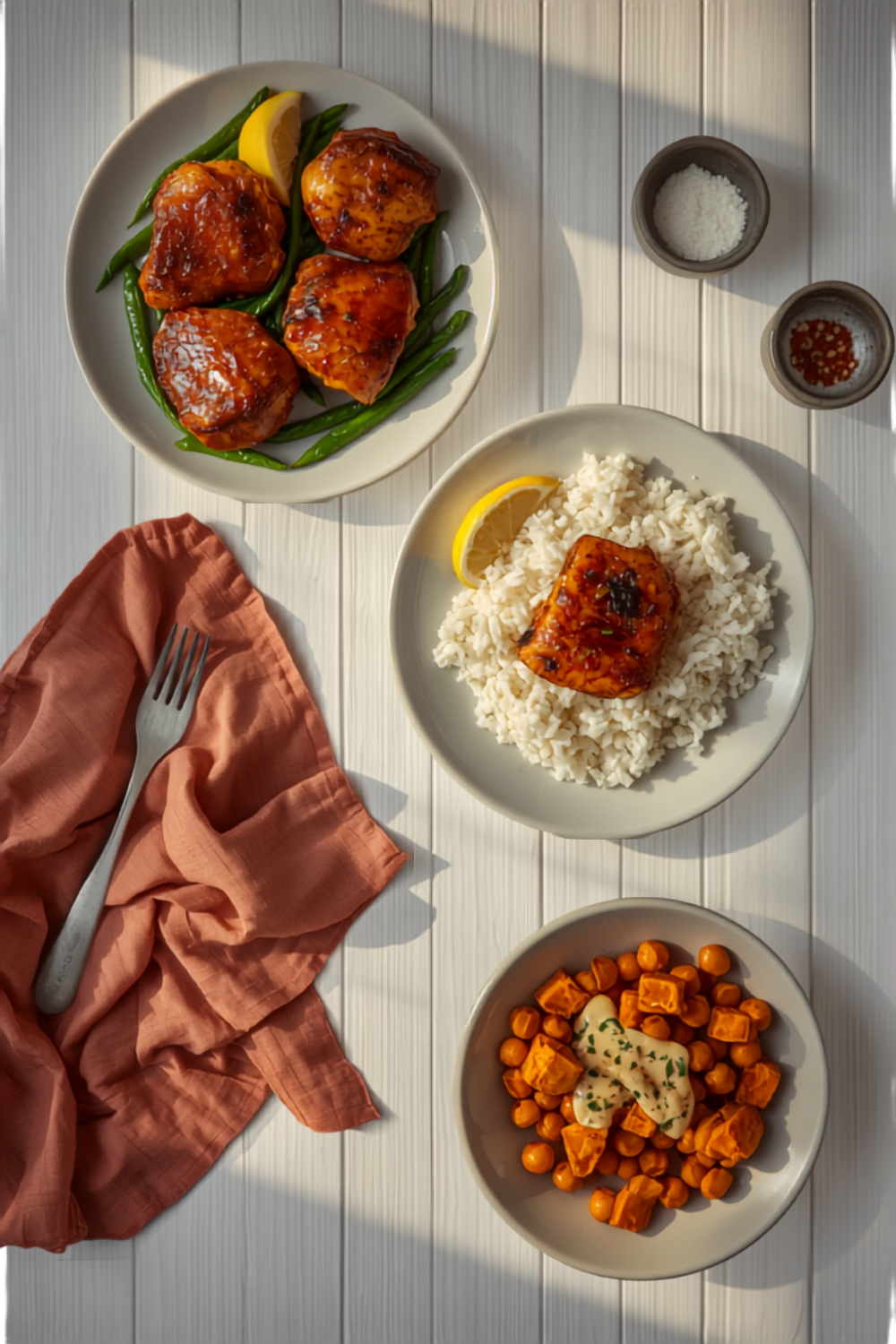
dinner one: crispy chicken thighs with green beans in the same basket
this is the one i make most, because the vegetable cooks in the same basket on the same timer and there is genuinely nothing else to wash. boneless skinless thighs, not breasts — thighs have enough fat to survive dry heat and they don't turn to cardboard if you're two minutes late pulling them.
- boneless skinless chicken thighs — use only as many as fit in a single layer with space between them, patted very dry with a paper towel
- 1 tbsp olive oil, 1 tsp smoked paprika, 1 tsp garlic powder, 3/4 tsp kosher salt, 1/2 tsp black pepper
- 12 oz green beans, trimmed, tossed separately with 2 tsp oil and a pinch of salt
- half a lemon, for squeezing over at the end
preheat to 400°F (about 4 minutes). toss the thighs in the oil and spices, lay them in a single layer with a little space between each one, and cook 18 minutes total. flip at 10 minutes, and at that same flip, pile the green beans in around and on top of the chicken. they'll finish in the last 8 minutes — blistered in spots, still with a bite. pull the chicken at 175°F in the thickest part. yes, 175 and not 165 — thighs are dark meat and they're better a bit past the safe minimum, where the connective tissue has actually softened. squeeze the lemon over everything and you're eating. start to plate: about 25 minutes.
if you only have chicken breasts, it still works — cut them to an even thickness, drop to 375°F, and go 14–16 minutes, pulling at 165°F. breasts have no margin for error, which is exactly why i stopped guessing and started actually checking the temperature.
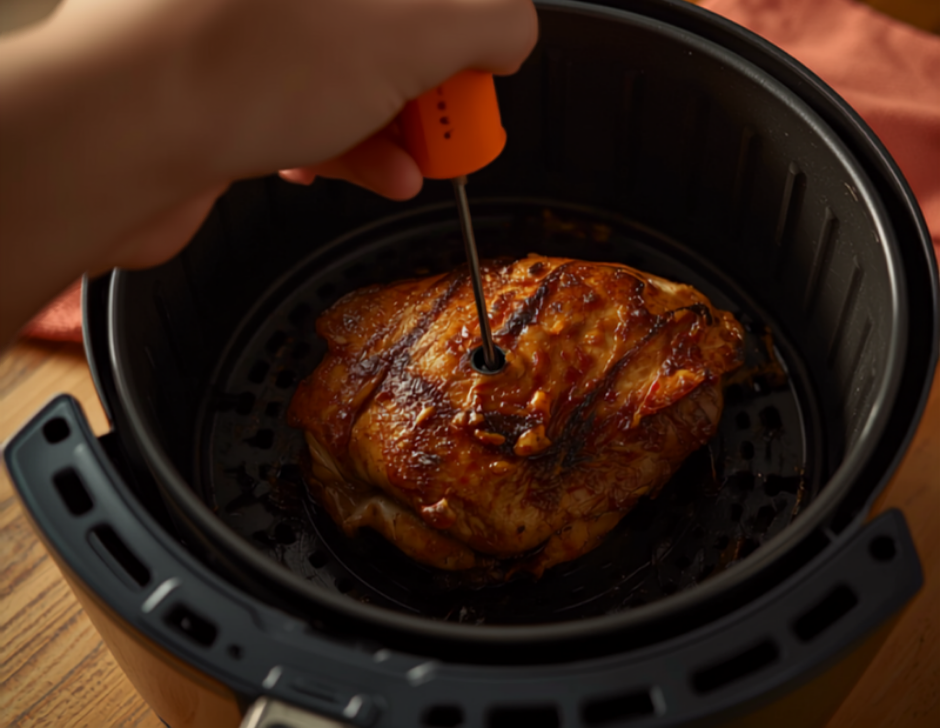
- reads in about a second with ±0.9°F accuracy, so you can check a thigh and close the basket before the machine has meaningfully cooled off
- a 3.9-inch folding probe — long enough to reach the middle of a thick fillet without putting your knuckles against a 400°F basket wall
- backlit display, which sounds like a gimmick until you're reading it inside a dark basket under a kitchen cabinet
- ipx6 water resistance means you can actually rinse the probe under the tap between the raw chicken and the salmon instead of wiping it on a towel
dinner two: maple-soy salmon, nine minutes
salmon is the fastest real dinner there is, and the air fryer is weirdly perfect for it — the top gets a lacquered, slightly caramelized surface while the inside stays soft, which is exactly the thing a skillet fights you on.
- 2 salmon fillets, about 6 oz each, skin on or off, patted dry
- glaze: 1.5 tbsp maple syrup, 1 tbsp soy sauce, 1 tsp dijon, 1 small grated garlic clove
- a little neutral oil for the fillets, salt and pepper
preheat to 400°F. oil and season the fillets and put them in skin-side down, not touching. cook 9 minutes for a 1-inch-thick fillet, and at minute 6 pull the basket out and brush the glaze over the top — that's the whole trick. brushing at the start burns the sugar; brushing in the last three minutes sets it into a glossy layer instead. cook until a food thermometer reads 145°F in the thickest part, following the federal safe minimum for fish. nine minutes is a starting estimate; thickness and air-fryer models change the time, so keep cooking until the temperature is reached.
a real warning here: sugar glaze plus a hot basket equals a sticky burnt ring if it drips. either brush conservatively so nothing runs off, or put a piece of parchment under the fillets for the last few minutes. rice from a rice cooker or a microwave pouch and something green on the side, and this is a 15-minute dinner including the preheat. it's also the closest thing to restaurant food you can make on a tuesday, which does something for morale.
dinner three: crispy chickpeas and sweet potato bowl
the no-meat one, and the one that changed my mind about air fryers doing vegetables. the texture you get on chickpeas here isn't achievable in an oven in the same time — they go properly crunchy on the outside and stay creamy in the middle. this is also the recipe that stretches furthest for the money.
- 1 large sweet potato, cut into 3/4-inch cubes, tossed with 1 tbsp oil and salt
- 1 can (15 oz) chickpeas, drained, rinsed, and dried very well on a towel, then tossed with 2 tsp oil, 1 tsp cumin, 1/2 tsp smoked paprika, 1/4 tsp cayenne, salt
- to serve: cooked rice or greens, a spoonful of yogurt or tahini thinned with lemon, hot sauce
preheat to 400°F. sweet potato cubes go in first for 10 minutes, shaking the basket once at 5. then add the chickpeas right on top and go another 10–12 minutes, shaking twice. they're done when a chickpea makes an audible click against the side of the basket and the sweet potato edges are dark at the corners. build the bowl, spoon the sauce over, eat. about 28 minutes with prep.
drying the chickpeas is not optional, and it's the difference between crunchy and chewy — wet chickpeas steam themselves. this is also where the lower fan speeds earn their keep, because on max fan the light ones tumble straight up into the element. and the honest bonus: a double batch of just the chickpeas, cooled, is the best crunchy snack in my kitchen and i refrigerate it promptly in a covered container, which makes it one of the rare things that's both dinner and the thing you eat standing up at 3pm.
why three, and how the rotation actually works
three is deliberate. two recipes and you get bored by week two; five and you're back to decision fatigue at 6:40 pm, which is the actual enemy — not cooking time. three means one chicken night, one fish night, one no-meat night, and the shopping list barely changes week to week. everything above shares the same core: something patted dry, tossed with oil and spice, into a preheated basket at 400°F, checked with a number rather than a guess.
the piece that makes any of this survive a real week is that the ingredients are already there. i keep a can of chickpeas, a bag of frozen green beans and a jar of smoked paprika in a fixed spot, and i can see all three without moving anything — same see-it-to-use-it logic i wrote about in my fridge and pantry reset. and when i want the same effort level without turning the fryer on at all, i fall back to the chicken rice bowls, which are the stovetop cousin of dinner one and take about the same twenty minutes. between those and these three, my weeknights are basically solved from september to may.
one habit worth stealing: cook the protein for two nights while you're already standing there. an extra batch takes longer, so allow that time, and cold sliced air-fried chicken over greens the next day is a genuinely good lunch. the basket is already dirty either way.
honest pros and cons
the fryer. pros: the square 6-quart basket is the real feature — flat, usable area for four thighs or two fillets in one layer, which is what actually determines whether food crisps or steams. the five fan speeds solve the flying-food problem that made me hate my first air fryer. it's quiet enough to talk over. around $90-ish is fair for what it does, and it goes on sale often enough that it's worth watching.
cons, and these are real. counter space: it's roughly the footprint of a stand mixer and it does not fit in a normal upper cabinet, so it lives on the counter permanently or you won't use it — if your counter is already full, be honest with yourself before buying. the dishwasher reality: the basket is dishwasher-safe, but the crisper plate has slots that trap chicken fat, and the dishwasher does a mediocre job on those; i hand-wash the plate in about 45 seconds while the food rests, and the nonstick coating lasts noticeably longer for it. capacity: 6 quarts feeds two people well and three at a push. a family of five is doing two batches, which kills the whole time argument.
and what an air fryer is genuinely bad at, because a lot of posts skip this. wet batter — it drips through and burns onto the element, so anything beer-battered is a hard no. anything saucy or liquid: it can't braise, it can't simmer, it can't make a stew, it's a convection oven and nothing more. large flat things like a whole tray of cookies, because the basket is small and stacked layers just steam. loose leafy greens, which fly up into the heating coil. cheese that melts and runs. it also does not fry — no oil, no submersion, so air-fried french fries are good roasted potatoes, not fries, and if you go in expecting fries you'll be disappointed. and the thermometer: pros are that it costs about ten dollars and removes all guessing from the one thing that ruins weeknight chicken; the con is that it's another small gadget in a drawer, and it eats a battery if you leave the probe unfolded, which turns it on.